CV UID guide
CV UID vs Traditional CVs and Job Portals: Why Employers Value Structured Candidate Profiles
See how CV UID differs from static resume files, resume builders, networking profiles and job portals—and why structured, searchable and current candidate profiles can help employers hire more efficiently.
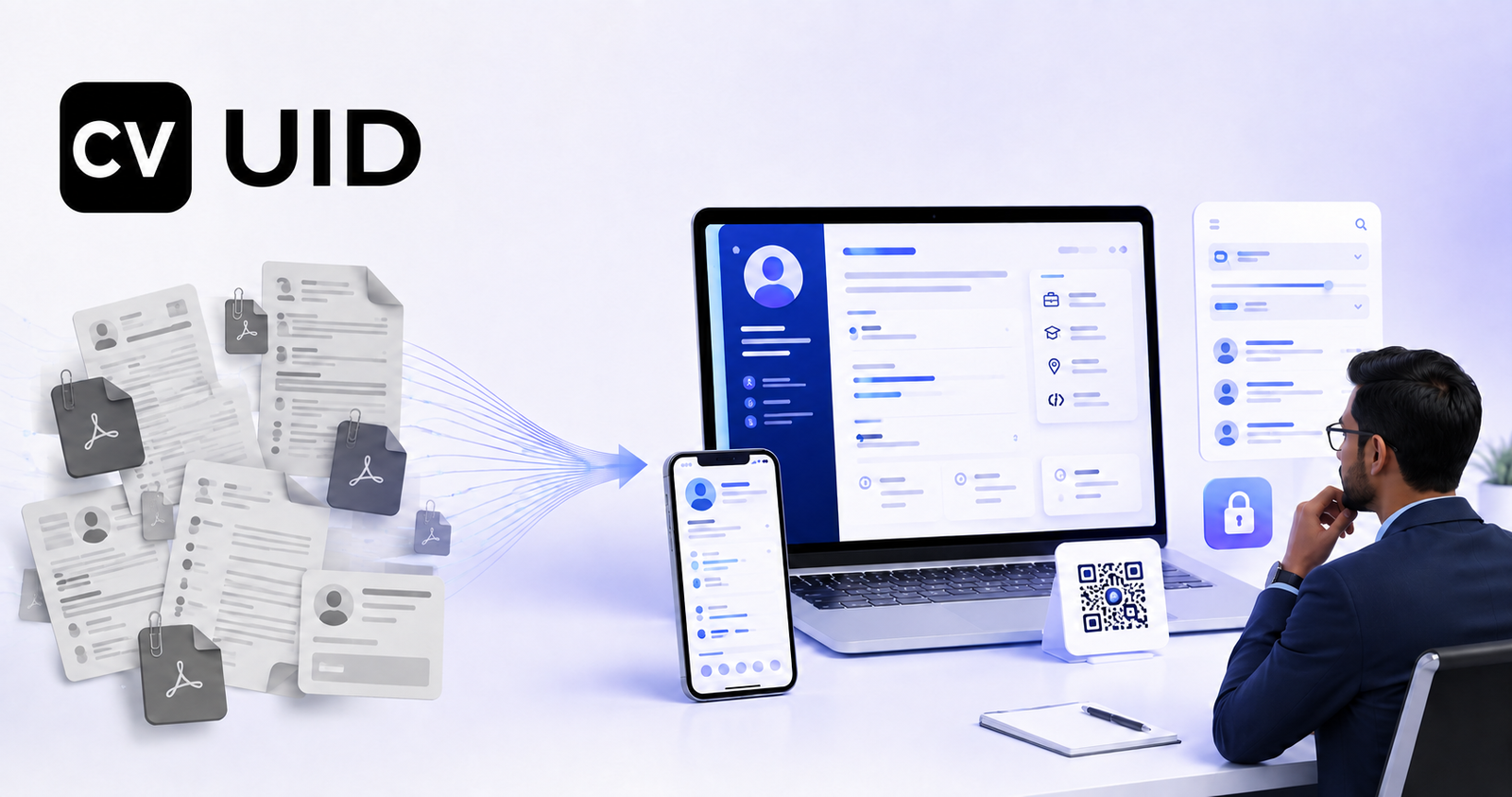
Recruiters rarely struggle because there are no CVs. The real challenge is finding the right information inside many CV files, messages, profiles and application systems—and deciding which candidates deserve a closer review.
A traditional resume remains useful, but a file can become outdated as soon as a candidate changes a job, completes a project, learns a skill or updates contact information. Job portals help people apply for vacancies, while professional networking platforms help them build connections. Resume builders help create documents. Each serves a purpose, but candidates and employers still need a simple way to share and review one current professional profile.
CV UID approaches that problem differently. It gives each candidate a permanent CV UID, a structured online CV, a shareable link, a printable QR card and control over who can view the complete profile. Employers can search relevant public and PIN-protected profiles by professional information and request access when permission is required.
CV UID does not claim to replace every job portal, Applicant Tracking System or recruitment process. It works as a focused professional identity and candidate-discovery layer that can complement the tools candidates and employers already use.
What employers need from a candidate profile
During an initial review, an employer normally wants quick answers to practical questions:
- What role does this candidate perform or want?
- Which skills are relevant to the vacancy?
- How much experience does the candidate have?
- Where is the candidate located?
- What has the candidate worked on recently?
- Is the education or training relevant?
- Is this information current?
- Can the complete CV be viewed with appropriate permission?
Indeed's employer guidance on reviewing resumes recommends scanning for job-relevant keywords and skills before examining qualifications and employment history more deeply. LinkedIn's Future of Recruiting report also highlights quality of hire, recruiter efficiency and skills-based hiring as important priorities.
These needs help explain why consistent, searchable professional information is increasingly useful. Employers still apply human judgement, conduct interviews and perform the checks appropriate to a role, but better-organised candidate information can improve the first stage of discovery and review.
How CV UID is different from a traditional CV file
A PDF or Word resume is a fixed copy. Once it has been sent by email, WhatsApp or a job application, that copy remains with the recipient. If the candidate later updates a phone number, learns a new skill or changes employment, the employer may still open the older version.
CV UID provides a permanent profile link connected to a unique ID. The candidate can update the professional information without changing the CV UID or previously shared URL.
The difference is simple:
- A traditional CV is a document version.
- A CV UID is a lasting professional profile identity.
Candidates can still download a branded PDF when a fixed document is needed. The online profile remains the current source that can be shared in a message, email, referral or professional conversation.
How CV UID is different from a resume builder
Most resume builders are designed around document creation. A candidate enters information, selects a template and exports a file. This can be useful for preparing an application, but the main output is still normally a document that must be regenerated and resent after every change.
CV UID focuses on what happens after the CV is created:
- The candidate receives a permanent, non-sequential CV UID.
- The same online CV link remains usable after profile updates.
- The profile can be public, PIN-protected or private.
- A QR business card can open the online CV.
- Employers can search matching candidate profiles.
- Candidates can review profile visits and employer access activity.
- Authorised CVs can be downloaded as branded PDFs.
This turns the CV from a one-time file into a professional profile that can remain useful throughout the candidate's career.
How CV UID is different from professional networking platforms
Professional networking platforms are valuable for connections, posts, company updates and public conversations. However, a networking profile is designed to support many activities at once. A recruiter may need to move through posts, interactions and different profile areas before reaching the information needed for a hiring decision.
CV UID is deliberately narrower. The public view is focused on the CV itself: headline, summary, skills, experience, education, projects, certifications, achievements and other career details in a consistent structure.
Candidates can still share a CV UID link through LinkedIn or another network. The social platform starts the conversation; CV UID provides the focused professional profile.